| Type | Definition | Related Concept |
| First-level digital divide | Emphasis on connectivity and digital device ownership | Internet access rate, fixed and mobile broadband access rate, 5G usage rate |
| Second-level digital divide | Emphasis on the ability to use the Internet and the way it is used | Internet application and service usage |
| Third-level digital divide | Emphasis on differences in results due to Internet use | Digital literacy and fact checking |
The First-Level Digital Divide
- The first-level digital divide often occurs due to disparities in internet access capabilities caused by age and educational level. Among these, the population aged 70 and above and those with elementary school education or below have relatively disadvantaged internet access rates. Data from residential areas also shows that internet usage rates among residents in the Yilan-Hualien-Taitung region are relatively lower than other regions.
Non-Internet Users Analysis
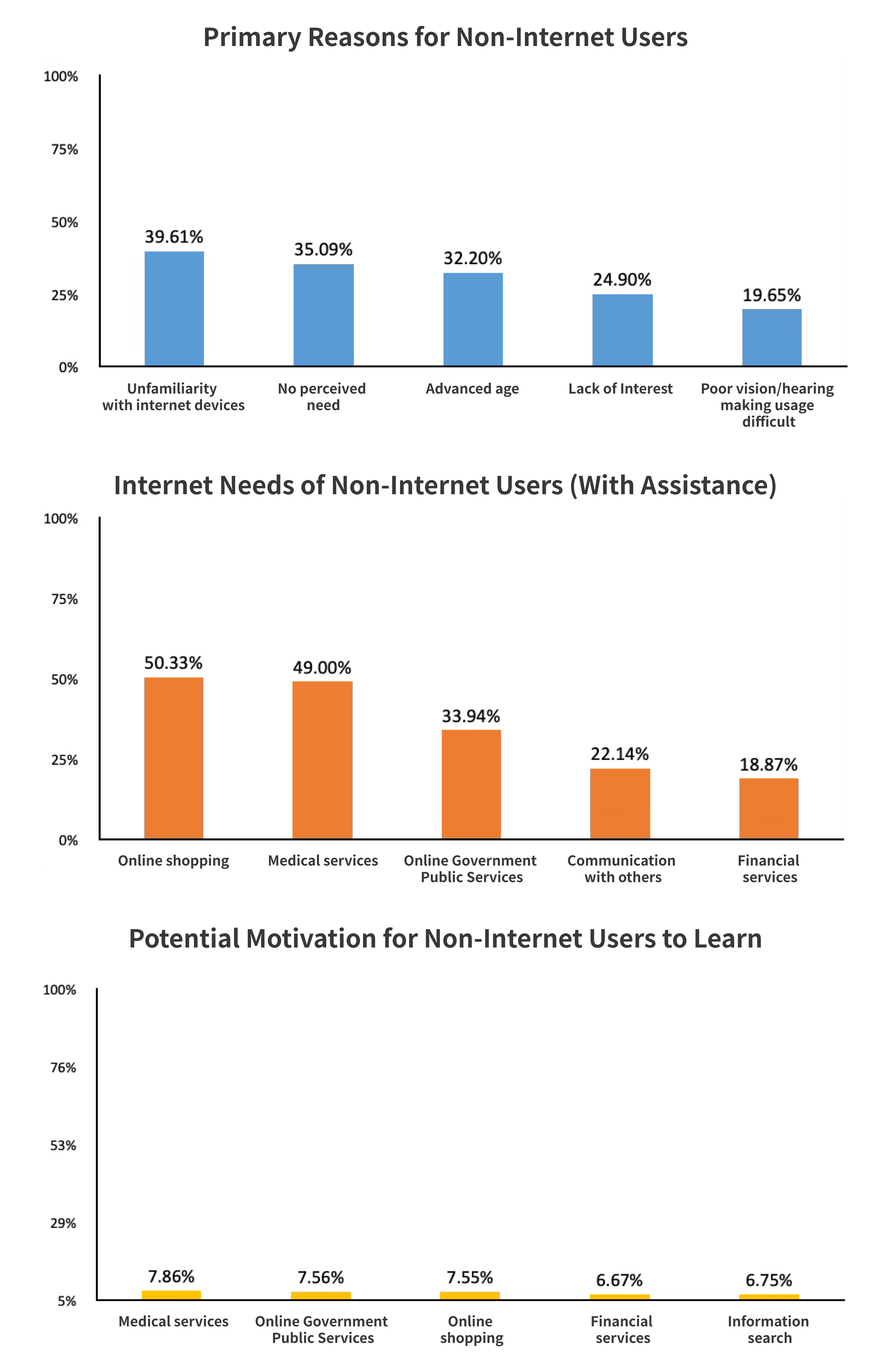
Source: 2025 Taiwan Internet Report, conducted from July 28 to September 1, 2025, weighted values. Sample size: 241, internet users requiring assistance for internet access: 47 (dual-frame sampling, excluding internet users, all three questions are multiple-choice).
The Second-Level Digital Divide
- The second-level digital divide extends the internet capability gap from the first-level digital divide, with the population aged 70 and above and those with elementary school education or below showing significantly lower application service usage rates compared to other groups.
The Third-Level Digital Divide
- In today's increasingly complex information ecosystem, information verification and digital literacy have become key indicators for measuring the third-level digital divide. This survey examines the current situation among Taiwan's population from three dimensions: confidence in information verification, information verification behavior, and the degree of importance placed on message accuracy and ideological consistency when sharing on social media.
Confidence in Information Verification

31.62%
of internet users lack confidence in verifying news authenticity
Information Verification Behavior

65.91%
of internet users "never" or "rarely" verify information proactively
Accuracy-based Sharing

77.23%
of internet users prioritize message accuracy when sharing on social media
Selective Sharing

66.97%
of internet users prioritize alignment with their own position when sharing on social media